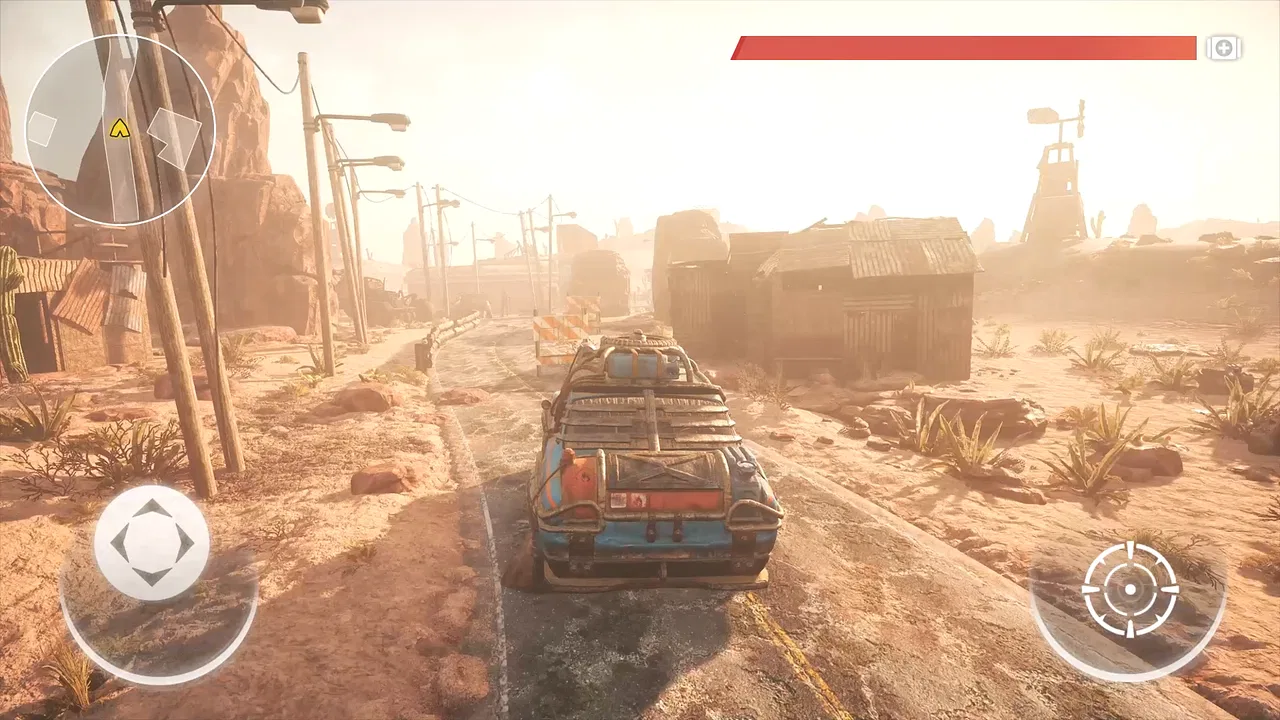
Evolution 2: Shooting games
- 4.5
- Rating
- 10.00M
- Installs
- Free
- Price

 Analysis by App-foxy
I approached Evolution 2: Shooting games expecting a fairly familiar mobile shooter, but its most interesting quality is the way it combines shooting with strategic decision-making and role-playing progression. The result is not simply a game about aiming at targets. I am constantly deciding where to move, when to use an ability, which character fits the next encounter, and whether improving one part of my squad is more useful than spreading resources around. That mix gives each short session more thought than a standard run-and-gun game.
It is an action game developed by KEYSTORM HOLDINGS LTD, and it is available as a free download. The game has built a substantial audience, with an average rating of 4.5 from around 205 thousand ratings and more than 10 million installs. Those figures do not automatically make it a good match for everyone, but they do reflect that the central formula has found plenty of players who enjoy shooting games with a longer-term progression layer.
After spending time with it, I would describe the experience as a good choice for someone who wants action without giving up planning. It is less suitable if you want a pure competitive shooter, a quiet offline game, or a completely frictionless free experience. Its strengths become clearer when I treat the strategic layer as the main feature rather than as decoration around the shooting.
You May Also Like

 Blood Strike: 2.5 Anniversary
Blood Strike’s Loadouts Turn Every Drop Into a Tactical Gamble
A close look at Blood Strike’s custom loadouts: how fast access to signature weapons reshapes its battle royale rhythm, rewards preparation, and narrows the gap between fights.

 Pandora - Music & Podcasts
Pandora’s Music Is Easy to Start, but Harder to Recover
Pandora’s strength is its low-effort path from a seed to a station. Its weak spot is how much confidence it asks you to place in connection, setup, and quiet recovery.

 8 Ball Pool
 Is Built on Rivalries, Rematches, and Routine
A close look at the rivalries, rematches, shared routines, and unanswered safety questions that turn a quick pool match into a persistent mobile community.

 Samsung Music
’s Quiet Strength Is Playing What You Already Own
Its reach comes less from spectacle than from dependable access to a personal library. That simplicity is both the app’s strongest retention engine and its ceiling.

 AccuWeather: Weather Radar
AccuWeather Review: A Quick, Clear Forecast for Everyday Decisions
For everyday plans, the best forecast is the one you can understand quickly. AccuWeather makes rain timing, radar, and local conditions easy to act on, with a few trade-offs.

 Hill Climb Racing
Why Hill Climb Racing Still Turns Crashes Into One More Run
A tiny car, a bumpy hill and one more upgrade: Hill Climb Racing keeps resurfacing because its simple chaos makes every near-miss feel personal.
More From Our News Desk
View All News


Why the strategy-and-shooting combination matters
I use this section to look at what the strategy adds to each shooting encounter, beyond simply choosing where to aim. That distinction matters when deciding whether the game’s layered approach feels satisfying or gets in the way; next, I’ll consider how its early objectives give players a reason to keep learning.
The important capability is decision-making during combat
The defining capability here is the combination of direct shooting and tactical control. I am not just watching numbers rise between battles, nor am I only moving a character through an arena. The action asks me to pay attention to positioning and timing while also thinking about the wider development of my team. That creates a useful middle ground between a traditional role-playing game and a straightforward mobile shooter.
This matters because the same encounter can feel different depending on how prepared I am and how I react. A player who only focuses on firing may get through easier fights, but tougher moments expose the value of choosing a better approach. I have to watch the battlefield, avoid treating every enemy as an identical target, and use the tools available to me with some restraint. The game rewards awareness more than frantic tapping.
I also like that the strategic element gives progression a purpose. Improving a character is not merely a number rising on a menu; it changes how confident I feel when entering the next action sequence. That connection between preparation and performance is what separates this game from many casual shooters that can be enjoyed for a few minutes but rarely encourage me to think about the next session.
At the same time, the blend is not aimed at players who want the precision of a dedicated console-style shooter. The action is designed for touch controls and a broader mobile audience, so the appeal comes from combining several accessible systems rather than delivering the deepest possible gunplay. I see it as a hybrid first and a shooter second.
How the different layers support one another
The shooting gives immediate feedback: I move, aim, attack, react, and try to stay alive. The role-playing side gives those actions a longer context, while the strategic layer encourages me to consider what I am doing before I commit. When all three parts are working together, a battle feels purposeful instead of like an isolated sequence of targets.
A useful habit is to pause mentally before each encounter, even when the game makes it tempting to rush. I look at the situation, decide which character or improvement is likely to help, and then enter the fight with a simple priority in mind. Sometimes that means concentrating on a dangerous opponent first. At other times, it means staying mobile and refusing to spend a powerful option too early.
This is one of the less obvious strengths of the game: it can make small improvements in judgment feel as satisfying as upgrades. If I survive because I positioned myself better or timed an action more carefully, the victory feels earned in a way that automatic progression does not. That is especially noticeable when I replay a situation and handle it more cleanly.
There is also a practical benefit for mobile play. Because the experience is divided into action-focused encounters and progression decisions, I can approach it in different moods. I can play actively when I have time to concentrate, or make development choices during a shorter break and return to the action later. I would not call it a completely casual game, but it fits mobile routines better than a long uninterrupted campaign.
What playing it feels like in practice
The first thing I noticed was that the game asks for more attention than its simple touch interface might suggest. Moving and shooting are easy to understand, but success depends on combining those actions with sensible choices. I cannot rely on one button or one character forever. A strong opening may still lead to trouble if I ignore positioning, waste an ability, or enter a difficult sequence without preparing properly.
My preferred approach is to use the early part of a fight to understand the threat rather than immediately spending every useful option. This is a small but important trade-off. Saving a powerful action can make the later part of an encounter much safer, but holding back too long can create unnecessary damage. The game becomes more enjoyable when I stop treating every battle as a race and instead manage the rhythm of the encounter.
Progression decisions deserve similar care. When several improvements are available, I try to choose the one that solves a problem I am actually experiencing. If I am losing because I cannot survive long enough, a defensive improvement may be more useful than a purely offensive one. If fights are dragging because I lack finishing power, the opposite may be true. This sounds obvious, but the game is much less satisfying when I upgrade automatically without connecting the choice to my play style.
That approach also helps reduce wasted resources. Free-to-play role-playing games can encourage players to improve everything a little, yet a focused build is often easier to understand and more rewarding. I prefer to strengthen the parts of my team that I use most, then expand once the core setup feels reliable. This is not a shortcut through the game, but it gives progression a clearer direction.
A realistic everyday session
Imagine having a short break after work or between classes. I would not open this game expecting a single relaxed tap-through, because the action requires enough attention to make careless play frustrating. Instead, I would use the first few minutes to check my current progression, choose a sensible improvement, and then play one or two encounters with the sound or visual cues in mind. That makes the session feel complete even if I do not stay for a long run.
On a longer evening, the same structure works differently. I can concentrate on improving a weak part of my setup, test that change in combat, and decide whether the result justifies further investment. This trial-and-adjustment loop is where the game has more depth than a typical quick shooter. The session is not only about winning the next fight; it is also about learning what kind of preparation makes my next attempt smoother.
My practical tip is to avoid playing while distracted. The game may be installed on a phone, but the strategic shooting combination punishes divided attention more than a passive idle title would. If I am checking messages every few seconds, I am more likely to miss a threat, waste an action, or blame progression for a mistake that was really caused by poor focus.
Where it differs from ordinary mobile shooters
Compared with a conventional arcade shooter, this game offers more reasons to return after a single battle. A pure shooter may deliver faster immediate action, but it often has less room for long-term planning. Here, the role-playing and strategic systems give me a reason to think about character development and preparation, not just reflexes.
Compared with a slower role-playing game, the combat is more hands-on. I am not simply choosing commands and watching the result. I have to engage with the action directly, which makes victories feel more connected to my decisions. The compromise is that neither side reaches the extreme depth of a specialist. Players seeking an advanced tactical RPG may find the systems streamlined, while dedicated shooter fans may want more precise and competitive gunplay.
That middle position is both the game’s identity and its main limitation. I enjoy it because it avoids being one-dimensional, but someone choosing it must genuinely like hybrids. If the appeal of a shooter is instant action with no menus or development choices, the extra layers may feel like interruptions. If the appeal of an RPG is detailed character theory and complex planning, the action-oriented design may feel comparatively light.
The trade-offs behind the free-to-play model
The game is free to download, which makes it easy to try without committing money at the start. It also includes in-app purchases ranging from $0.99 to $109.99 per item. That range is important to keep in mind before investing heavily in progression. I can begin without paying, but the presence of purchases means I should treat spending as optional support rather than as a requirement I quietly accept during a difficult stretch.
My advice is to decide on a personal limit before buying anything. That is especially useful in a progression-focused action game, where a new improvement can feel tempting immediately after a frustrating battle. If I am already enjoying the tactical loop, I would first ask whether changing my approach could solve the problem. Sometimes the best upgrade is learning when to move, when to wait, or which part of the team needs attention.
The free-to-play structure can also affect the pacing I prefer. Players who want to advance quickly may feel pressure when progress slows or when a stronger setup looks attractive. Players who are happy to develop gradually will probably find the model easier to live with. I consider patience one of the hidden requirements of enjoying this game without letting purchases dominate the experience.
Another trade-off is the amount of mental switching involved. I move between action, upgrades, and strategic choices, and that variety keeps the game from becoming dull. However, it also means the experience is not as immediately clean as a simple shooter. Someone looking for a game to open, fire through a quick round, and close may prefer a more focused alternative.
Age, device, and expectations
The content rating is Teen, so I would not present this as a game designed for young children. Parents should consider that rating alongside the action-focused design and the presence of in-app purchases. For older players, the rating fits the game’s combat-centered identity without changing the fact that it remains a mobile title built around accessible sessions.
The minimum operating system is Android 6.0, which gives it broad compatibility with older Android devices. Even so, compatibility is not the same as a guarantee of an ideal experience. On a phone with a smaller screen or less comfortable touch response, aiming and movement may feel less natural. I would try it on the device I plan to use regularly before deciding whether it deserves a permanent place on my home screen.
The current version is 0.2737.90127. I mention that because players sometimes compare their experience across devices and assume every difference comes from skill or progression. Keeping the app updated is a sensible first step when the controls or performance do not feel right, although the quality of the experience will still depend on the phone itself and the player’s tolerance for touch controls.
Who gets the most from this design
I think the best audience is someone who wants a mobile action game with a reason to plan. You will probably enjoy it if you like experimenting with character development, adjusting your approach after a defeat, and switching between direct combat and longer-term decisions. It is also a good fit for players who find basic shooters repetitive but do not want to commit to a large, slow role-playing game.
It works particularly well for players who enjoy improvement through small corrections. The game does not need every encounter to be a dramatic test. I get value from noticing that one decision made the next battle easier, then carrying that lesson forward. That kind of gradual mastery is more important here than chasing a perfect reflex performance from the first minute.
I would be more cautious about recommending it to someone who dislikes free-to-play progression, even if they never intend to spend. The purchase range can make the economy part of the experience, and some players simply prefer a paid game with a clearer boundary. I would also steer competitive shooter specialists toward a game built specifically around precise multiplayer combat, because this title’s appeal is the hybrid structure rather than pure competitive mechanics.
Likewise, people who want a story-first role-playing game may find the shooting takes too much attention away from dialogue and character detail. The game’s identity is action-led. Its role-playing elements support the battles, rather than replacing them with a deep narrative adventure.
My verdict after weighing the whole experience
Evolution 2: Shooting games is at its best when I treat every battle as both an action challenge and a preparation lesson. The shooting keeps the sessions lively, while the strategic and role-playing layers give my decisions a longer consequence. That combination is the reason I would recommend it over a basic mobile shooter to a friend who wants more to think about without entering a very complex RPG.
I would not recommend it blindly. The free-to-play structure, touch-based action, Teen rating, and hybrid design all narrow its audience. It is not the right choice for someone seeking a completely purchase-free progression path, a pure competitive shooter, or a slow narrative RPG. Those are not minor details; they determine whether the game feels engaging or unnecessarily complicated.
For me, the strongest use case is a player who enjoys short but attentive sessions and likes seeing a tactical idea produce a better result. Start slowly, focus upgrades around the problems you actually encounter, and resist spending simply because a difficult fight feels inconvenient. With that mindset, the game’s unusual blend becomes a genuine advantage rather than a collection of disconnected systems.
KEYSTORM HOLDINGS LTD has built a free action game that asks for more thought than its shooter label initially suggests. Its average rating of 4.5 and audience of over 10 million installs make it easy to understand why it attracts attention, but my recommendation rests on the play experience itself: choose it if you want shooting tied to planning, progression, and adaptation. If that sounds like the kind of decision-making you enjoy on a phone, it is worth trying.
FAQs for Evolution 2: Shooting games
01What is Evolution 2: Shooting games about?
Evolution 2: Shooting games is a science-fiction action RPG that combines third-person shooting with character development, tactical abilities, and story-driven missions. You play as a combatant defending the planet from dangerous enemies while exploring a futuristic world. Battles involve aiming, taking cover, choosing abilities, and upgrading equipment rather than simply firing continuously at everything on screen.
02Is Evolution 2: Shooting games free to download and play?
The game is generally free to download, but it includes optional in-app purchases. You can progress through the campaign and improve your characters without paying immediately, although purchases may help speed up upgrades, obtain resources, or access certain conveniences. Players should also expect energy, currency, or progression systems that can limit how quickly some activities are completed.
03Does Evolution 2 require an internet connection?
An internet connection is normally required for important parts of Evolution 2, including account synchronization, rewards, events, updates, and other online services. While some individual gameplay moments may appear to continue briefly after a connection is interrupted, it is best to assume that the game is primarily online. A stable connection also helps prevent lost progress or loading problems.
04Is Evolution 2 suitable for children?
Evolution 2 is aimed more at teenagers and adults than young children. It contains frequent shooting, science-fiction combat, explosions, hostile creatures, and action-oriented violence. The game also includes in-app purchases and online features, so parents may want to review the platform’s age rating and enable purchase restrictions before allowing younger players to install it.
05What devices are needed to play Evolution 2 smoothly?
Performance depends on the specific Android or iOS device, operating-system version, available storage, and graphics capabilities. Newer mid-range and flagship phones generally provide smoother visuals and shorter loading times, while older devices may experience reduced performance, overheating, or crashes. Before downloading, check the current store requirements and keep enough free storage for updates and additional game data.
Pros
- Varied alien enemies keep battles from feeling repetitive.
- Character upgrades offer meaningful ways to improve combat performance.
- Special abilities add tactical depth beyond basic shooting.
- Story missions provide extra motivation to progress.
- The sci-fi setting gives the game a distinctive visual identity.
Cons
- Energy limits can interrupt longer play sessions.
- Some upgrades may require considerable grinding to unlock.
- Combat can become repetitive during extended missions.
- Random rewards may make progression feel inconsistent.
- The interface can feel crowded on smaller phone screens.

Evolution 2: Shooting games
Gallery